
Location: Broughty Ferry, Dundee
Technology: Solar photovoltaic (PV) panels, heat pumps and battery storage
CARES funding: £47,712 through capital grant and Community Buildings Fund
Background
Broughty Ferry Baptist Church planned to improve the facilities available to the local community and increase accommodation for its Sunday services by extending its church building. During planning it became apparent that the building’s gas boiler was not large enough to provide adequate heat for the planned extension.
When the professionals preparing the extension plans mentioned that heat pumps and solar panels could be an alternative to a second gas boiler, the Broughty Ferry Baptist Church began to investigate renewable technology. It quickly realised the potential to significantly reduce its carbon footprint by moving away from gas heating completely.
Project aims
The aim of the project was to decarbonise the church building by moving it away from its reliance on gas and installing a reliable and efficient heating system for the comfort of all those who use the building.
After speaking to local MCS accredited companies, it decided heat pumps would be the best option to increase the building’s energy efficiency. It also decided it wanted to install solar photovoltaic (PV) panels and battery storage to allow the building to generate and store its own electricity.
Ahead of applying for funding from CARES Broughty Ferry Baptist Church spoke with another local church that had undertaken a similar project, to learn from its experience. It also spoke to Business Energy Scotland and got an independent report to provide reassurance that the proposed systems were an appropriate choice for its building
Achievements and outcomes
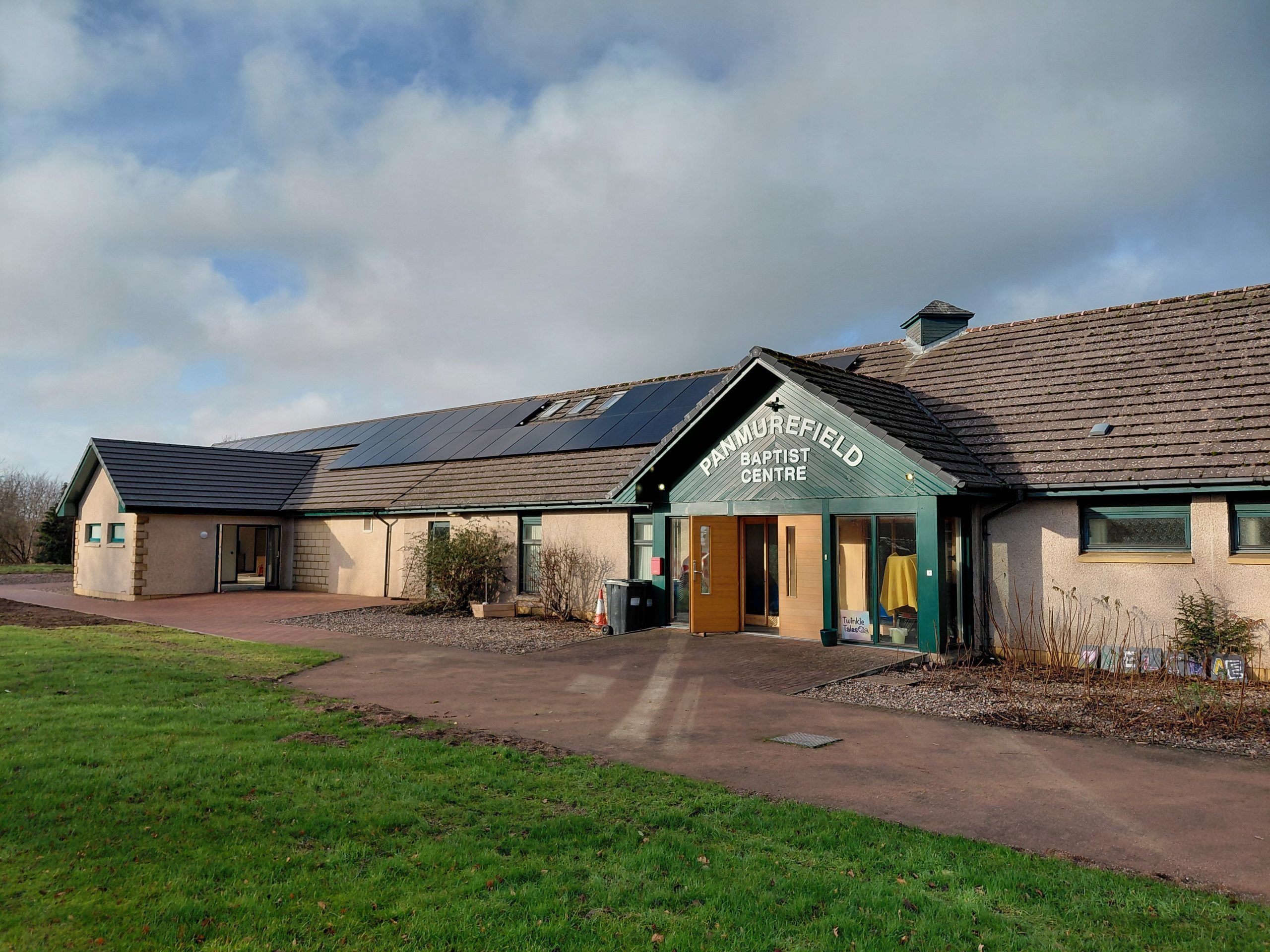
The Broughty Ferry Baptist Church made a successful application to the CARES Community Building Fund, receiving a capital grant of £47,712 to support the installation of heat pumps, solar PV panels and battery storage.
The church has now completely removed its dependence on gas for heating. The new heating system allows rooms to be heated up more quickly and efficiently. Heating can now also be operated remotely, meaning it’s much easier to adjust and only heat rooms as and when they are needed, which prevents energy waste.
The church is now also generating and storing its own electricity thanks to the solar PV panels and battery storage, reducing its reliance on the grid and further lowering the building’s carbon footprint.
A spokesperson from the church shared: “we can already see that the solar panels and batteries will have a positive impact on our energy bills and we look forward to seeing the full benefit of this as time goes on.”
“We are delighted to be able to show the effectiveness of these new technologies within our community and everyone who uses our building will be able to see them in action. We hope this helps to dispel some of the myths about renewable technologies and will encourage others to consider them.”
Lessons learned
Having not had any prior experience with renewable technology, the Broughty Ferry Baptist Church noted: “The experience of other people was invaluable and so being able to visit another project, see their heating systems in action and hear about their experience was incredibly helpful.”
It also noted that it gained useful information from Local Energy Scotland case studies and webinars and the independent report from Business Energy Scotland reassured them that the measures would result in a positive change.
It would encourage any other group interested in doing a similar project to seek out advice and help as early as possible, to ensure that the technologies will be an appropriate fit for their setting.
It also recommends ensuring you have plenty of time to work through the application process, so you can make the most of the support that is available through development officers.